
Machine intelligence · Agentic AI · Governed swarm management

Comparison · Operations

AgentOps vs LLMOps: operating models for systems that can act

LLMOps manages language-model applications and their lifecycle. AgentOps extends operations to planning, tool use, stateful trajectories, delegated authority, and multi-agent coordination.

Enterprise

Published Updated Reviewed By LongTermIntelligence.com

Direct answer

What is the difference between AgentOps and LLMOps?

#

LLMOps is the discipline for developing, deploying, evaluating, observing, and governing applications that use large language models. AgentOps adds the operational requirements of agents: goals, plans, state, tool calls, identities, permissions, handoffs, human authority, side effects, budgets, and incident recovery.

  • AgentOps builds on rather than replaces LLMOps.
  • The useful unit of evaluation shifts from one response to an end-to-end trajectory and outcome.
  • Operations must observe both semantic behavior and real-world effects.

Source basis: reviewed synthesis of the strategy corpus. Report-derived claims remain subject to the verification boundary in the source library.
Decision table

Operational scope

The names matter less than assigning each responsibility to an accountable owner.

CapabilityLLMOps emphasisAgentOps extension
VersioningModels, prompts, retrieval, datasets, configurations.Agent charters, tools, policies, state schemas, handoff contracts, authority tiers.
EvaluationResponse quality, groundedness, safety, latency, and cost.Plan adherence, tool choice, trajectory quality, coordination, side effects, recovery.
ObservabilityPrompt, response, retrieval, model, token, and error traces.Agent state, messages, tool calls, policy decisions, approvals, and business outcomes.
Identity and accessApplication and service access.Per-agent and per-task identities with least-agency permissions.
ReleaseModel or application deployment gates.Workflow, authority, execution, and rollback gates.
Incident responseModel or application failure.Semantic cascades, unauthorized action, memory poisoning, stuck loops, cost runaway.
EconomicsCost per request or model call.Cost per successful task, exception, reviewed decision, and recovered failure.

Reference diagram

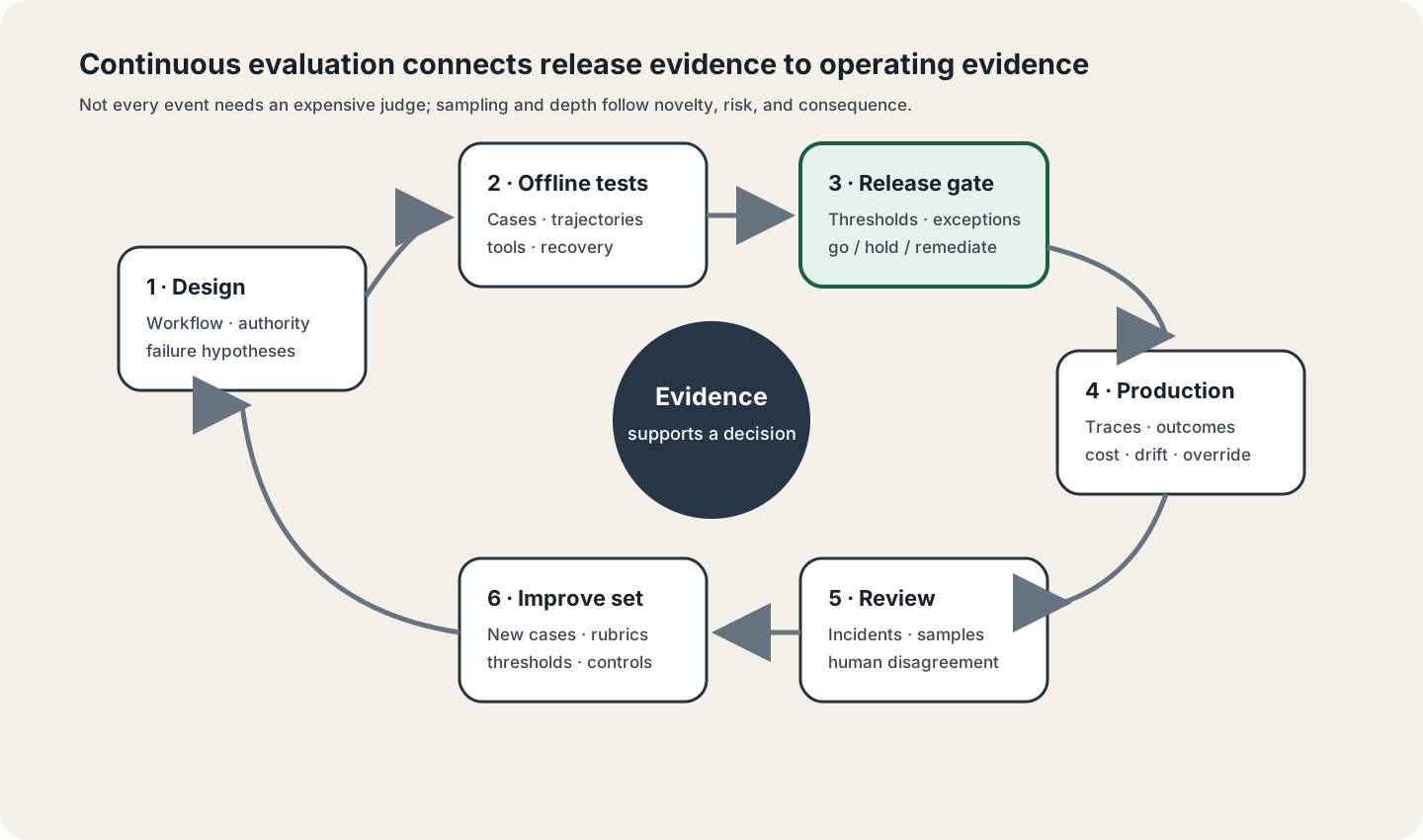
Continuous agent operations loop

Evaluation is connected to release, production traces, incidents, and the next test set.

A circular diagram linking design, offline evaluation, release gate, production observation, incident review, and test-set improvement.
A continuous loop does not mean every event must be evaluated by an expensive model.

Working checklist

Minimum AgentOps operating record

Maintain enough evidence to reconstruct what happened and why.

  • Agent and workflow versions, owners, purpose, and risk tier.
  • Model, prompt, retrieval, tool, and policy versions.
  • Task inputs, selected context, plan, messages, and state transitions.
  • Tool requests, authorization outcomes, side effects, and returned evidence.
  • Human review, approval, override, escalation, and stop events.
  • Quality, latency, cost, policy, and recovery measures tied to outcomes.

Next step

Define operations around the whole trajectory

A working session can map current LLMOps capabilities and identify the identity, state, authority, evaluation, and recovery controls needed for agents.

Private local search

Find machine intelligence, agentic AI, swarm management, services, industries, use cases, definitions, or research

Press / to open search when focus is not in a form field.

Search runs locally against the public site index.