
Machine intelligence · Agentic AI · Governed swarm management

Comparison · Operating layers

Agent orchestration vs an agentic control plane

Orchestration answers how work moves. A control plane answers what may act, under which limits, with what evidence, and how the system is stopped or recovered.

Enterprise

Published Updated Reviewed By LongTermIntelligence.com

Direct answer

How is agent orchestration different from an agentic control plane?

#

Agent orchestration coordinates tasks, messages, sequencing, delegation, and retries. An agentic control plane is the broader governance and operations layer that manages identities, permissions, model and tool access, budgets, policy, evaluation, approvals, telemetry, incident controls, and shutdown across one or more orchestrators.

  • An orchestrator may be one component inside the control plane.
  • The control plane should remain separable from the agents it governs.
  • Not every low-risk workflow needs a large centralized platform.

Source basis: reviewed synthesis of the strategy corpus. Report-derived claims remain subject to the verification boundary in the source library.
Decision table

Layer responsibilities

Use the distinction to expose missing operational controls.

ResponsibilityOrchestrationControl plane
Task graph and routingPrimary responsibility.Sets allowed routing patterns and policy constraints.
Agent identityMay name roles.Creates, authenticates, scopes, expires, and inventories identities.
Tool permissionsInvokes configured tools.Authorizes tool use by task, role, data, time, and consequence.
Model routingMay choose models for steps.Applies approved model policy, cost limits, residency, and fallback.
Shared stateCoordinates task state.Defines storage policy, isolation, lineage, retention, and access.
EvaluationMay run local checks.Defines release gates, continuous tests, evidence retention, and exceptions.
Human authorityMay pause for approval.Defines who may approve what, at which threshold, with which record.
OperationsRetries and timeouts.Observability, budgets, kill switches, incident response, and recovery.

Reference diagram

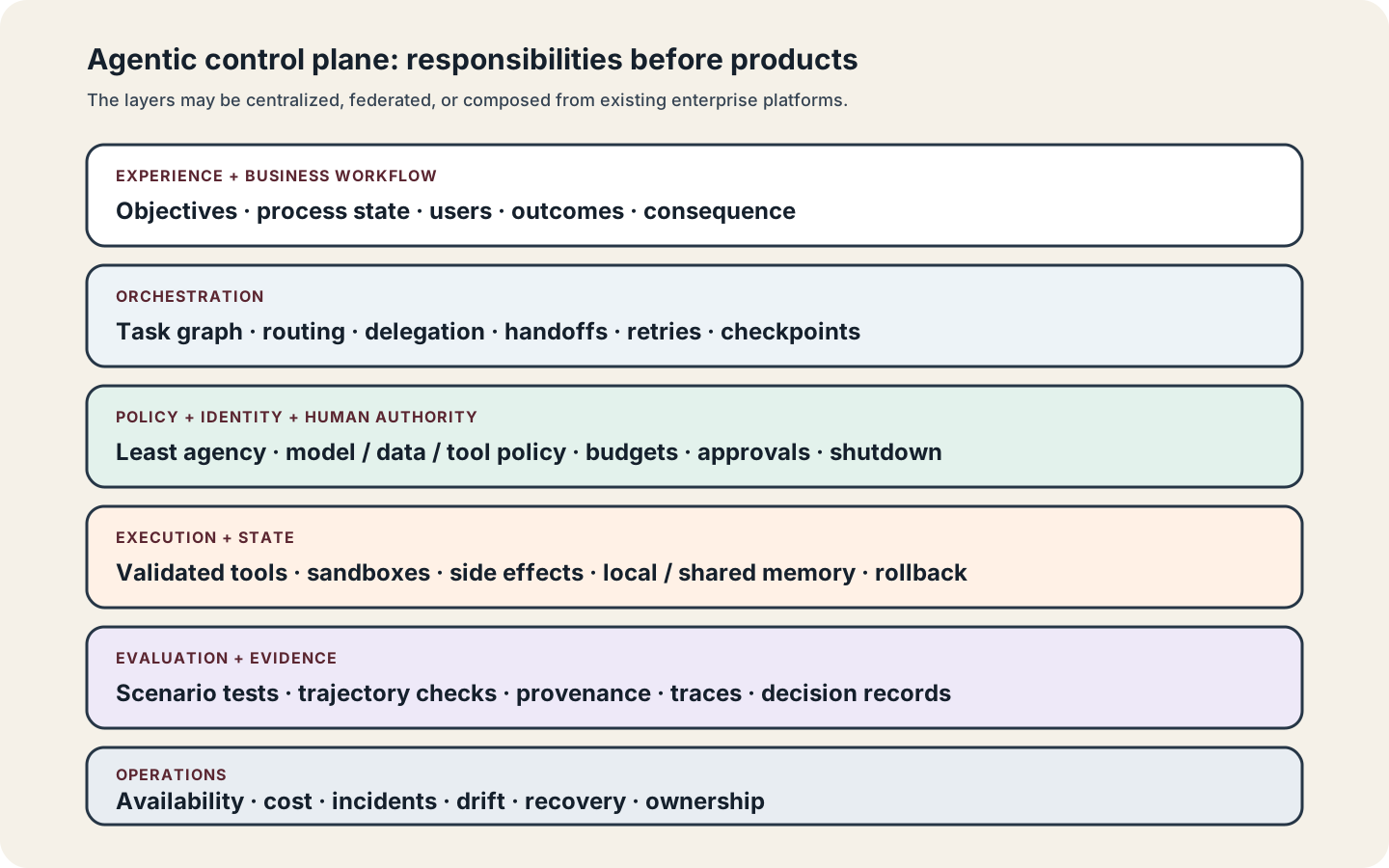
Five layers of an agentic control plane

A reference model separates business workflow from policy, identity, evaluation, state, and execution.

A layered diagram of experience, orchestration, control, execution, and evidence planes for enterprise agentic systems.
The exact implementation may be centralized, federated, or assembled from existing platforms.

Working checklist

Signals that orchestration alone is insufficient

A broader control layer becomes important when the system has these characteristics.

  • Multiple teams or business units deploy agents independently.
  • Agents use sensitive data or tools with side effects.
  • Models, vendors, or orchestration frameworks may change.
  • Cost, latency, or token use needs centralized budgets and attribution.
  • A risk, audit, or security team requires durable evidence.
  • Incidents must be contained across workflows rather than inside one application.

Next step

Map the missing control responsibilities

An architecture review can separate what the current orchestrator already handles from the controls that remain implicit or unowned.

Private local search

Find machine intelligence, agentic AI, swarm management, services, industries, use cases, definitions, or research

Press / to open search when focus is not in a form field.

Search runs locally against the public site index.